Alasitas Fair & The Ekeko – La Paz
[tabby title=”Description” open=”yes”]
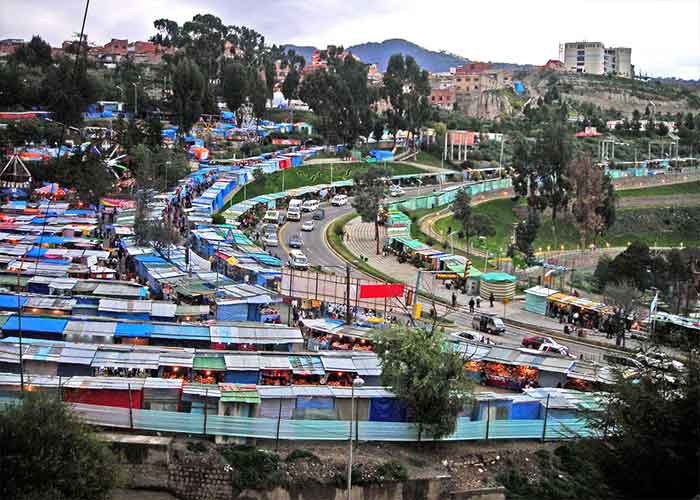
Alasitas Fair – Peace
The Alasitas fair is a tradition of the city of La Paz. It goes back to ancient Aymara traditions that became religious practices after the colony., responding to that usual syncretism that characterizes the rites and customs of Latin America. Actually, Initially the pre-Columbian god Ekeko of the festival was naked, but the Spanish dressed him in mestizos clothing.
Alasitas, which in Aymara means “buy me”, It is a fair in which originally the indigenous people exchanged miniatures, agricultural products, circular stones of color or with some particularity. The exchange was carried out with joy and with the hope of having, during the year, the products purchased. The celebration took place on 20 of October but in 1781 Sebastián Segurola established that the Alasita fair is the 24 January to celebrate the end of the indigenous siege of the city of La Paz which lasted many months causing food shortages in the city, in this way the Alasitas (festival of abundance) It meant the end of such a long period of hunger and need.
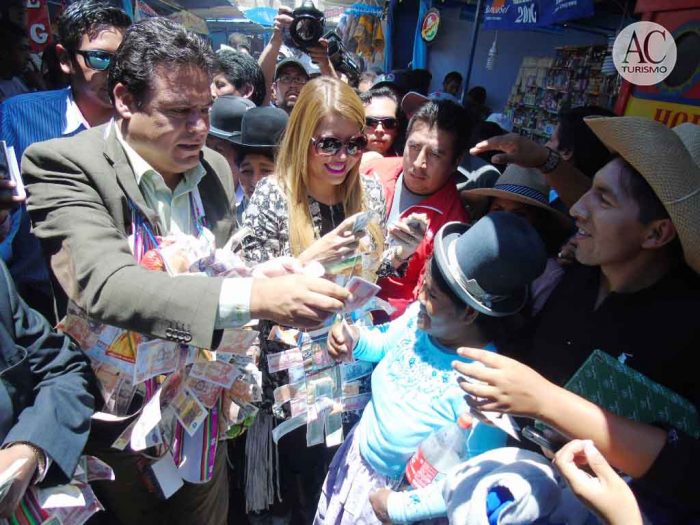
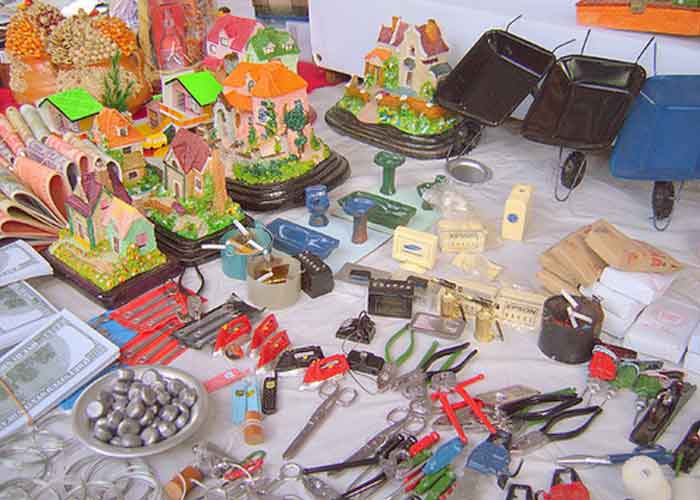
Alasita is a great party of desires and aspirations. Tradition establishes that one buys a miniature of what they need most in the current year.. It is necessary to attend the fair at noon and that a yatiri (sorcerer and healer) bye everyone (bless) the same, In addition, Alasita attendees stop by the nearest church or church of their choice to have the miniatures they have purchased blessed.. It would also work if the miniatures were given to one as a gift., by art of magic, come true.
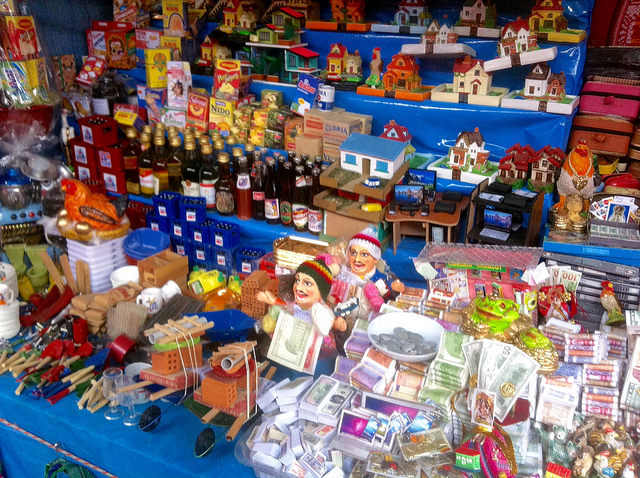
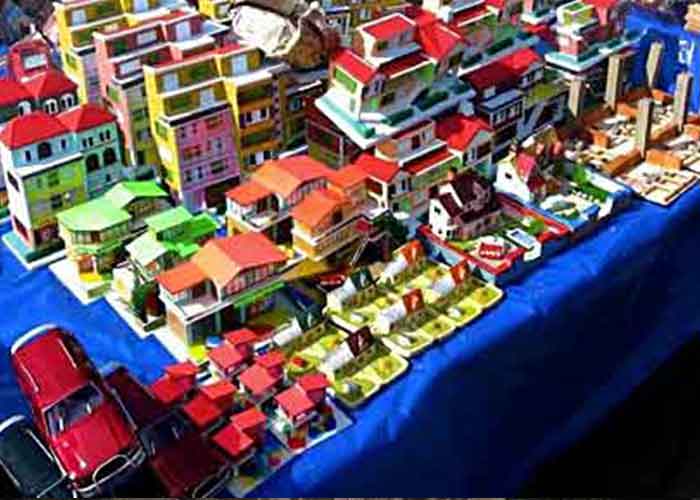
Almost exact replicas of Bolivian bills, Dollars and Euros, issued by the imaginary “Banco Central de la Fortuna or Alasitas”, so that there is no shortage of money; canned food, flour bags, sugar, rice, and all kinds of food products, to supply the home; suitcases, with or without papers, passports, visas and plane tickets to travel; craft roosters or hens, to get a boyfriend or girlfriend; construction materials, machinery and equipment, to finish the house; little cars, taxis, fleets (buses), trucks and vans, to have a vehicle, titles, postgraduate and master's degrees, to achieve an academic profession; in addition to having civil registries (of lies) where one can get married, get divorced or get your death certificate, property titles, Houses of 2 or three floors or complete buildings, to predict a good purchase and countless interesting miniatures capture the attention of the population.
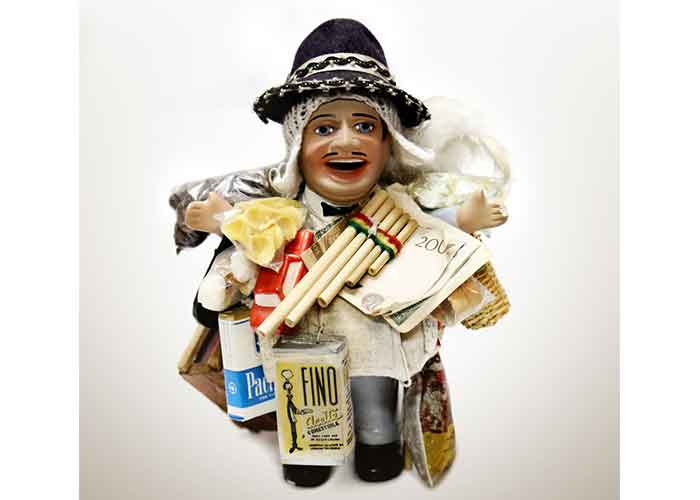
Every year on that date the newspapers put into circulation the “Alasitas newspapers” of tiny sizes that, as a form of satire and mockery, take the Ekeko as news and star and make fun of politicians and the people in a joking way. “important” or known to the media and showbiz. You have to give Ekeko his miniatures so that he fulfills the wishes requested., and also give him a cigarette to smoke every Monday and a little alcohol.
In addition, you can find typical foods from the fair, among which stand out: the “La Paz dish” (corn, wanton, potatoes and cheese), the anticucho and other creole dishes. Cookies of all flavors, sweetened apples, The infinite variety of typical dishes from western Bolivia and a variety of popular games such as table football or darts or air rifles ensure endless fun..
The Alasitas fair is one of the many traditions of the city of La Paz, and has been spreading to many other cities in the country and abroad. It is because of the candidness of the fair, the work of artisans and the faith in these rituals that have become a fundamental part of our society and one of the typical cultural expressions of this magical South American country.
EL EKEKO – IQIQU
El Ekeko, o Iqi Aymara, He is an Andean god, represented by a small statue, resulting from the syncretic transformation of the pre-Columbian god of abundance, fertility and joy, in the Tiwanaku civilization.
The legend says that in 1781, the young Isidro Choquehuanca offered a statue of the little god to his love Paulita, when she went to work where her teachers Doña Josefa Úrsula de Rojas Foronda and Don Sebastián de Segurola in the city of La Paz. Don Sebastián was then governor and commander of arms of the city of La Paz..
Shortly after his arrival in La Paz, The city was surrounded by an indigenous movement of 40.000 men, recruited by Tupac Katari, to rebel against the Spanish crown. For several months, The city could not supply itself and water and food were increasingly scarce.. Paulita, however, She did not suffer because her boyfriend had been recruited into Tupac Katari's army and passed the defense lines secretly, to bring food to his beloved.
Paulita, hurt to see her teachers who don't have enough to eat, He decided to bring them their food without putting Isidro in danger.. She chose to show the statue of the god of abundance of Tiahuanaco to her teachers, who, sunk in anxiety and anguish, They accepted this explanation without complaint. They humbly thanked this little Andean god who, at that time, was presented naked, with a disproportionate erect penis (since he was the god of abundance, of joy and also of fertility).
After several months of siege, The Spanish army arrived in La Paz and the city was liberated. The terrible hunger that the rest of the population had suffered had not affected the sergeant and his wife. Governor Don Sebastián de Segurola wanted to pay tribute to the small pre-Columbian god who had saved them. So, the fair that until then was held on 20 October of each year (date of the founding of the city of La Paz), moved to 24 January. During this fair, they sold or exchanged Ekekos. The governor, without any explanation, gave his word of honor, indicating that these figures would bring luck to their owners.
However, the Spanish decided to change the appearance of the Ekeko, dressing him and removing his lush penis.
From then on, The liberation of the city allowed a recovery of indigenous traditions through this optimistic superstition, that spread among all its inhabitants. without intending it, Don Sebastián Segurola launched a decree that stood out in the colonial and republican era. Since then, The tradition has remained deeply rooted in the popular sphere and the fair still exists today, every year in january. At the moment, Ekeko is a small god to whom cigarettes and alcohol are offered (a little hole in his mouth is planned so he can smoke) and small objects that represent the wishes that are asked of the god to fulfill them. For example, if you want to go on a trip, It is offered by a miniature airplane or a passport,during the fair.
[tabby title=”+Events”]
[do_widget id=arpw-widget-2]
[tabby title=”+Info PDF”]
[tabby title=”tourism companies”]
[do_widget id=arpw-widget-6]
Do you want to advertise your tourist services free?
Tourist agency
Travel agency
radio taxi service
Hotels
Tour guides
Interdepartmental transportation – rural
others…
[tabby end]