Urus floating islands – Peace
Recommendations
Wear warm clothing, comfortable walking shoes, sunglasses and sun hat, protector solar
Altitude 3808 masl
[tabby title=”Description” open=”yes”]
Urus floating islands – Peace
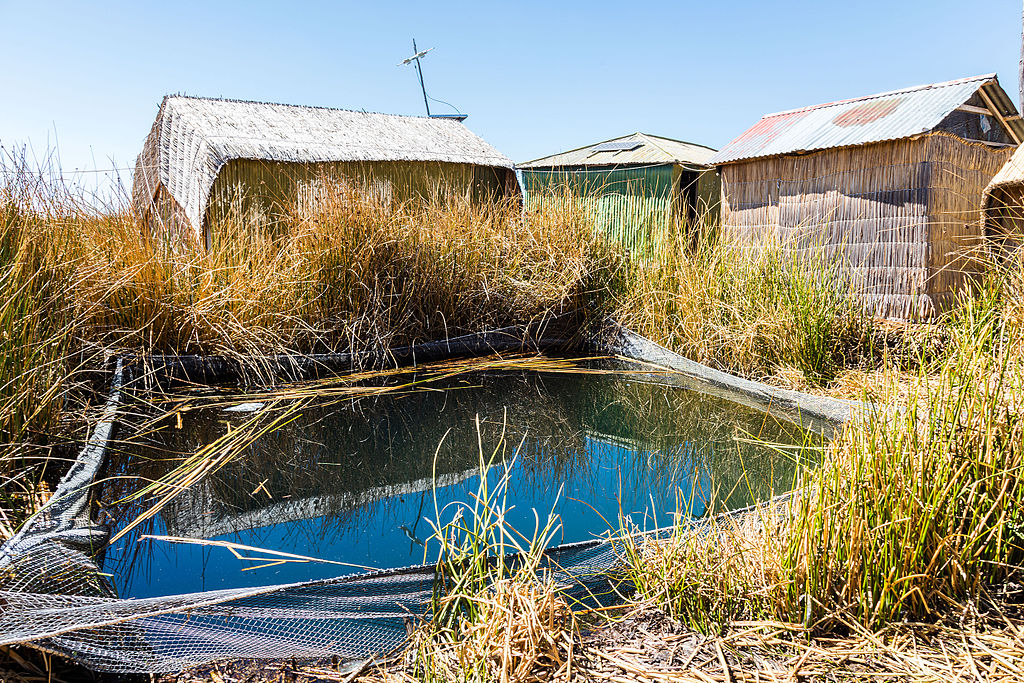
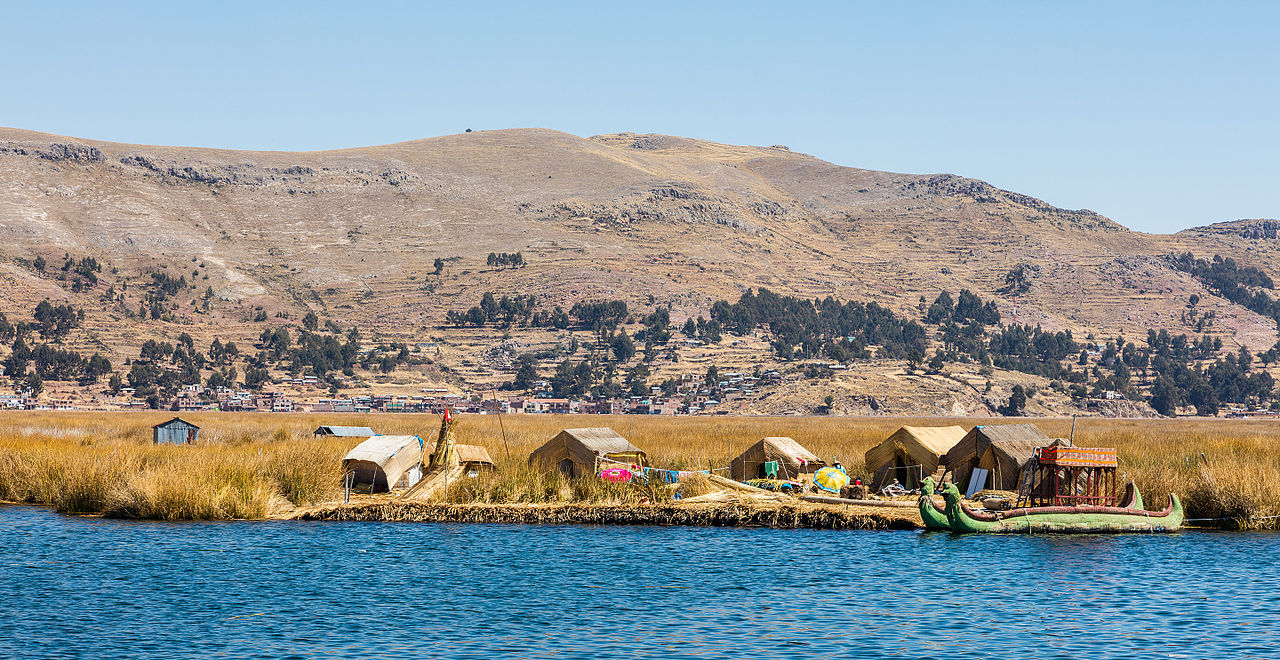
The floating islands of the Urus are a group of promontories made of reeds, the most famous in Lake Titicaca., is located at 6 km from the port of Puno and 3.812 m.s.n.m. there is a surprising archipelago of 40 reed islands (species of reed that grows in the swamps of South America), inhabited by the Urus, direct descendants of one of the oldest cultures on the continent. The origin of the Urus people was lost in the labyrinths of history, but it is presumed that they descend from the Pukinas, one of the oldest communities in America. The men of this floating community claim to be the owners of the waters of Lake Titicaca.
In reality the floating islands of the urus are not exactly islands, They are not floating, nor urus those who inhabit them. These are actually reed constructions that sit on the lake bed., and its inhabitants are of Aymara origin – the last urus died in the decade of 1950.
The current Aymara population has the skill to make reed constructions on the bed of Lake Titicaca.
Grouped around the Uros-Chulluni community, they offer rural tourism options that allow the traveler to stay on the islands and participate in the daily activities of the community members.. To get to them you must take a boat.
The reed is a renewable resource and essential for the life of the Urus, because with it they build their islands. The cattail, skillfully woven, It also constitutes the roofs, walls and doors of their homes. With the same material they make the main means of transportation between their islands and the continent.: the rafts. Another use of cattail, very important, is that when the stems dry they use them as firewood for their kitchens, fulfilling the function of fuel. With the advent of tourism, They began to make beautiful reed crafts, which they sell to help themselves in their economy. They also use it as food, since when you remove the bark, a white substance remains, fibrous, practically tasteless, but also used as a complement to their diets.
[tabby title=”+Places”]
[do_widget id=arpw-widget-16]
[tabby title=”+info PDF”]
…
[tabby title=”Tourism Companies”]
[do_widget id=arpw-widget-6]
[do_widget id=arpw-widget-17]
[tabby end]
[do_widget id=rednao_smart_forms_widget-4]