Cal Orcko & Cretacic Park – Sucre
[tabby title=”Description” open=”yes”]
Cal Orcko & Cretacic Park – Sucre
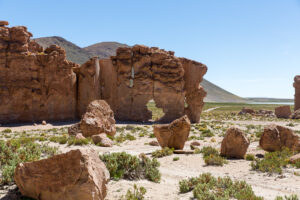
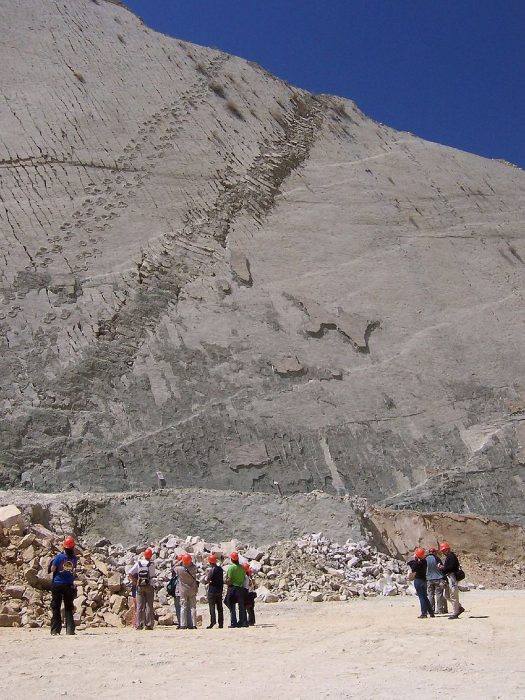
Cal Orcko (from the Quechua voice Cal Urqu, 'Cerro de Cal') It is a paleontological site in Bolivia, found in the quarry of a cement factory, close to the city of Sucre, in the department of Chuquisaca. It is the site with the most important dinosaur footprints in the world, since it contains more than 5.000 traces of 294 dinosaur species.
The discovery is an enormous contribution to history and science, which reveals data not known until now about the end of the Cretaceous period and the beginning of the Tertiary, a few ago 66 millions of years, thus documenting the high diversity of dinosaurs better than any other site in the world.
Until its discovery, the largest and most important site was Khjoda-Pil-ata, in Turkmenistan, and others in Portugal, Great Britain, Spain and Switzerland. Cal Orcko sin embargo, is several times larger than those: In other parts of the world they were only found up to 220 footprints of only two species.
It is located east of the city of Sucre. The immense site is located on a cliff with a slope of 73 degrees, of 80 meters high and 1.200 meters long. There are traces of 293 dinosaur species of different species printed in the Upper Cretaceous.
Location
It is located east of the city of Sucre. The immense site is located on a cliff with a slope of 73 degrees, of 80 meters high and 1.200 meters long. There are traces of 293 dinosaur species of different species printed in the Upper Cretaceous.
History
The first confirmation of its existence dates back to 1985, but it was 1994 a 1998 when a team of Bolivian paleontologists, Europeans and Americans led by Meyer studied and certified the site.
For some time now, workers have been struck by the strange impressions that 1994 They were identified by a local expert as footprints of saurians. Despite this, he could not get foreign experts to visit the place.. Later, a tourism documentary that arrived in Switzerland made Cristian Meyer's prehistory researcher's heart beat faster.; The dinosaur footprint specialist traveled to Sucre and was fascinated by what he saw. “It was a sight that took your breath away.”. The researcher personally knows all the important sites in the world, from Canada through Seychellen to Turkmenistan.
Cal Urqu is a stroke of luck for several reasons. For a start, The magnitude of the limestone wall is impressive, more than 25000 square meters, the surface of several football fields covered with footprints. Meyer deduces that it does 68 millions of years, Dinosaurs lived on the shores of a shallow lake, fresh and temperate water, that extended from the current Peru-Bolivian border to northern Argentina.
Cal Urqu was an immense shallow lake in the Upper Cretaceous. In the Tertiary, When the Andes mountain range was formed, tectonic movements brought that ancient bed to a vertical position.
In recent years, eight other deposits have been discovered, currently under study.
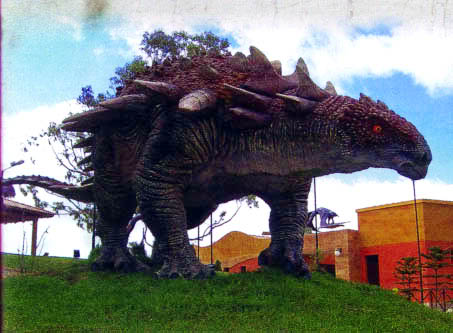
One of the discoveries that amazed everyone was that of ankylosaur footprints, a herbivorous quadruped that was believed to not exist in South America. This animal was represented as a clumsy and gigantic armadillo weighing about eight tons., but with subsequent studies of its footprints it was shown that it was a taller and more slender saurian., long-legged and lighter.
Traces of sauropod herbivores were also found, including the gigantic Titanosaur, of 25 meters high and some footprints 70 centimeters long, and large predators such as theropods with footprints 35 centimeters. Turtle footprints were also found, crocodiles, fish and algae from the Upper Cretaceous, that will allow paleontologists more exact studies about that time.
That the footprints of saurians and the remains of turtles, crocodiles, fish and algae are from the late Cretaceous, It is something very lucky for Meyer. Until now there was almost no data from that time.
Creation of the Cretaceous Park
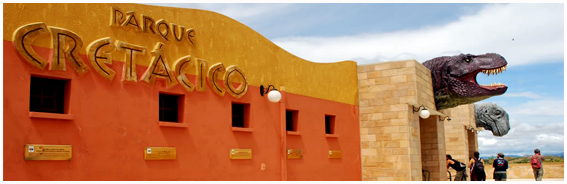
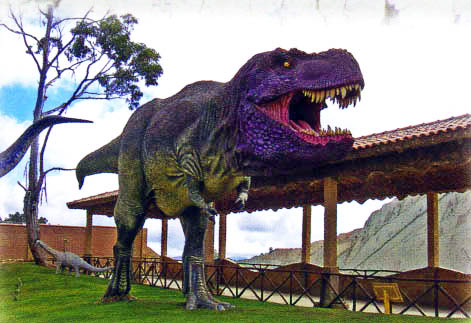
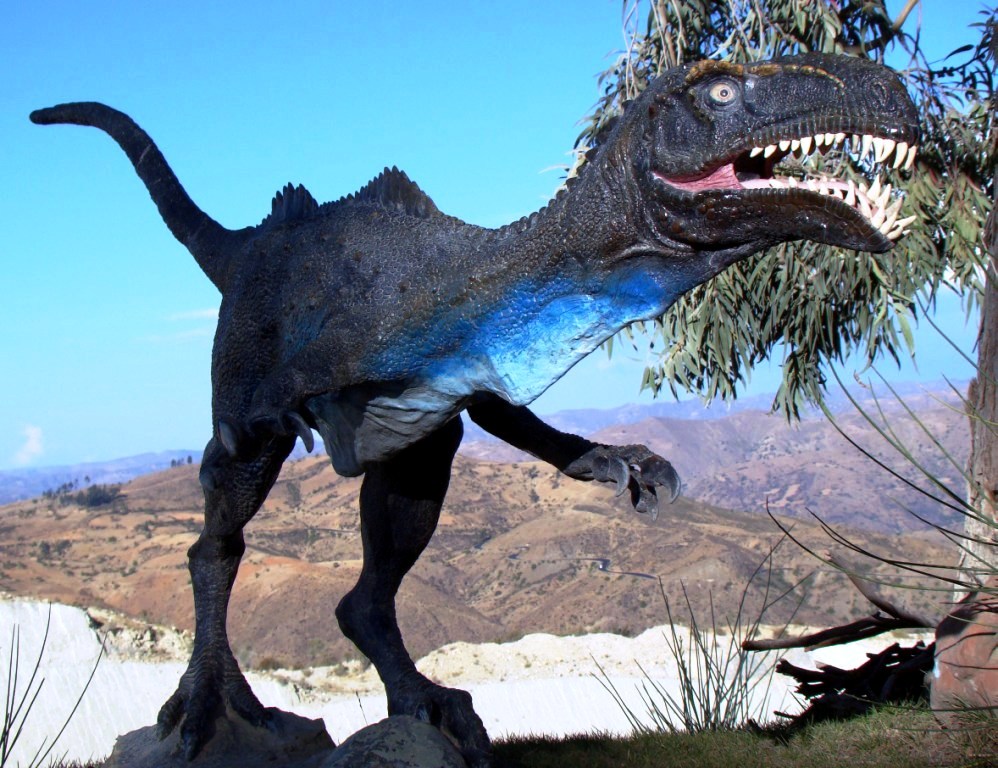
For the conservation of this site, it was opened in March 2006 a spectacular Cretaceous Park, in which there are exact replicas of the different species of dinosaurs that left their footprints in the place, It will also have an audiovisual museum to transport visitors to prehistory.. The creation of said park is due to the cooperation of the IDB, FANCY, SELFISH, in addition to sculptor artists of Bolivian origin.
FUENTE: es.wikipedia.org
[tabby title=”+Events”]
[do_widget id=arpw-widget-2]
[tabby title=”+Info PDF”]
[tabby title=”tourism companies”]
[do_widget id=arpw-widget-6]
Do you want to advertise your tourist services free?
Tourist agency
Travel agency
radio taxi service
Hotels
Tour guides
Interdepartmental transportation – rural
others…
[tabby end]
[do_widget id=rednao_smart_forms_widget-4]