San Francisco Museum Cultural Center – Peace
Generalities / Basic data
-
Official name: San Francisco Museum Cultural Center (sometimes abbreviated as Museo San Francisco)
-
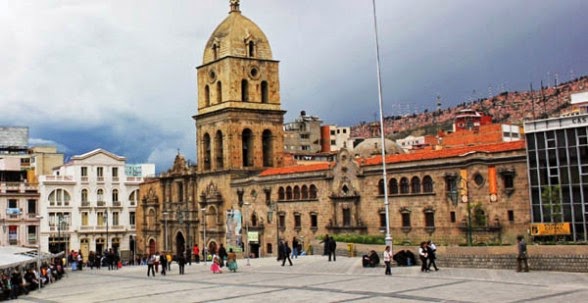
Location: Plaza Mayor / San Francisco Square, nº 501 (or they seek) in the historic center of La Paz, Bolivia
-
Approximate altitude of the city where you are (Peace): ~ 3.640 m.s.n.m.
-
Classification: ecclesiastical museum, cultural institutional in a historic building that combines basilica, convent and museum spaces.
-
Responsible institution: The complex belongs to the ecclesiastical area (franciscan order) and manages religious heritage, historical and cultural.
History and architecture
Origin and evolution
-
The original Franciscan convent was founded in 1549, just one year after the founding of the city of La Paz (1548), by the friars Francisco Morales and Francisco de Alcocer, under the patronage of Our Lady of the Angels.
-
Between 1548-1581 the first church/convent was built (initially with simpler materials).
-
Between 1608 y 1612, That building collapsed (due to snowfall or structural defects) and it was necessary to rebuild it.
-
In the middle of the 18th century (nearly 1743) The construction of the current temple with carved stone began, in mestizo baroque style, using indigenous labor, mestizo and creole.
-
The church was officially consecrated on 23 April 1784, with insignia of the Franciscan order on the cover.
-
In the 20th century, The complex suffered abandonment and deterioration, especially since the decade of 1970.
-
In 1987 Financing was obtained for a comprehensive restoration project.
-
The restorations were carried out in phases between 1993 and June 2005. During these works, ancient cloisters were recovered, exhibition spaces, the choir, the vaults and other areas of the convent and the church.
-
In August 2005 It was formally inaugurated as a museum / cultural center.
Architecture and significant spaces
The set is made up of:
-
The Basilica of Saint Francis
-
Built in carved stone, with mestizo baroque style façade.
-
The façade is carved in stone, with a three-section façade and two streets decorated with mestizo baroque motifs.
-
Internally it has three naves: the central nave covered by a barrel vault reinforced by transverse arches, while the side naves have elliptical domes.
-
Preserves original elements such as the pulpit, altarpieces, frontal, silver tabernacle, pictures of the presbytery with religious allegories and elements typical of the Franciscan Order.
-
In the crypt of the church there are tombs and urns with remains of illustrious people., including the “protomartyrs” of the revolution 1809, as Pedro Domingo Murillo, inter alia.
-
-
Ancient Cloister
-
Originally built between 1739 y 1765.
-
It has a central patio surrounded by galleries with arches (thirteen large arches on the ground floor and upper galleries)
-
During the restoration, the stone pieces were dismantled., the structure was consolidated, the arches were rebuilt, Roofs with eucalyptus and canahueca logs were recovered (bamboo).
-
Part of the convent was demolished in the 20th century due to the expansion of Mariscal Santa Cruz Avenue., what affected the original plant.
-
-
Main Cloister
-
Built between 1894 y 1897.
-
It has a trapezoidal design with brick arches on both levels..
-
Remains of the first convent were discovered (brick column bases) under the current floor during museographic excavations.
-
The patio of the Main Cloister is known as “La Huerta” and contrasts with the stone of the rest of the building..
-
-
Coro
-
Located on the second level of the basilica, about the ships, with access from the convent.
-
It has wooden seats (cedar) and an organ in its central space.
-
Chant books are exhibited on the museum tour, liturgical vestments, the guards, goblets, glows and other liturgical objects.
-
-
Other spaces: cedars, vegetable patch, cells, garden, crypt
-
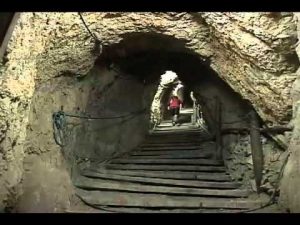
Museum tour includes narrow hallways, cells (friars' rooms), internal gardens/orchards, crypt with underground passages.
-
The walls of the building are thick (between 1 y 3 metros) to isolate the noise of the city.
-
Exhibitions, museum collections and content
-
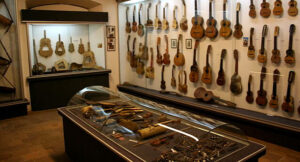
The museum preserves religious art collections from the 16th to the 19th centuries, including sculptures, paintings, goldsmith, textiles, furniture, altarpieces and liturgical objects.
-
Special emphasis on works of the mestizo baroque that combine European motifs with indigenous elements in the ornamental details.
-
Museography integrates dioramas that reconstruct historical scenes of ancient La Paz life, traditional homes, people from different times.
-
Relics of the city are exhibited: objects linked to the revolution 1809, urns with remains of martyrs, historical bells and other witnesses of the political and social process of La Paz.
-
In the crypt there are burials of prominent figures in Bolivian history (ej. Pedro Domingo Murillo) and urns with ashes displayed on commemorative dates.
-
The tours are guided; the guides sometimes speak several languages (español, local languages of La Paz, English, Italian, French, portuguese)
-
The museum has approximately 40 exhibition spaces on the museographic tour.
Visits, schedules and rates
-
Schedules: from Monday to Saturday 9:00 a 18:00 hours.
-
Suggested rates (according to source “Discover La Paz”):
• Children / elderly people: BOB 5
• Bolivian tourist: BOB 10
• Foreign tourist: BOB 20 -
The museum offers personalized and guided attention.
-
It is not always allowed to take photographs in sensitive areas such as the crypt (security restrictions).
Historical and cultural importance
-
It is considered the cradle of “peacefulness” because in that place the Revolution of the 16 July 1809, a precursor moment in the fight for the independence of Bolivia.
-
Stores relics and objects that are part of the symbolic heritage of La Paz and the country.
-
Acts as a link between political history, religious, architectural and artistic of Bolivia, helping to interpret the cultural evolution of La Paz.
-
Its strategic location in front of the Plaza Mayor / Plaza San Francisco makes it a nerve center of the historic center of La Paz., very visited by locals and tourists.
November 24, 2015
June 10, 2016
October 27, 2015
June 10, 2016
June 29, 2018